
Abotec Telescopes Store
Unlocking the mysteries of the night sky shouldn’t break the bank, and Abotec Telescopes Store makes starting your cosmic journey more accessible than ever. These portable refractor telescopes turn your backyard into a personal observatory, perfect for catching crisp views of lunar craters and bright planets. Whether you are a curious beginner or looking for the perfect gift for a young explorer, Abotec focuses on easy assembly and lightweight designs that go wherever the stars take you. High-magnification lenses and convenient smartphone adapters allow you to capture and share your first glimpses of the cosmos instantly. Experience the thrill of discovery with a budget-friendly setup designed to bring the universe a little bit closer to home.
Top Abotec Telescopes
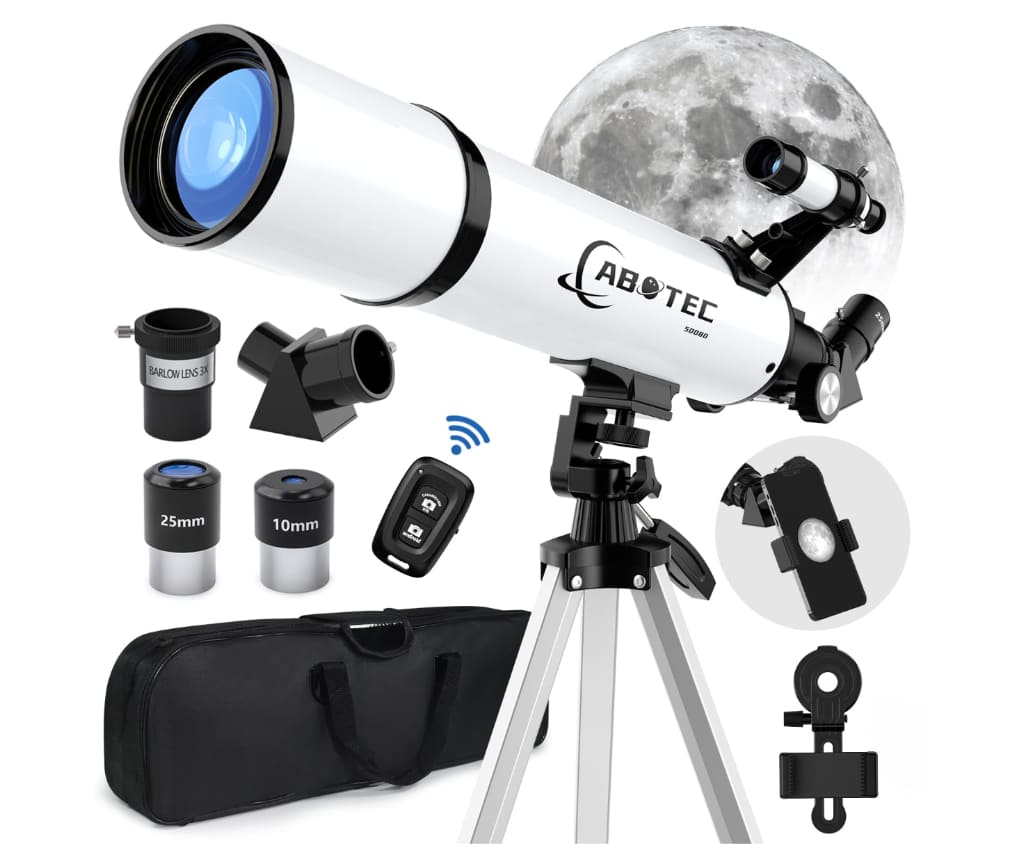
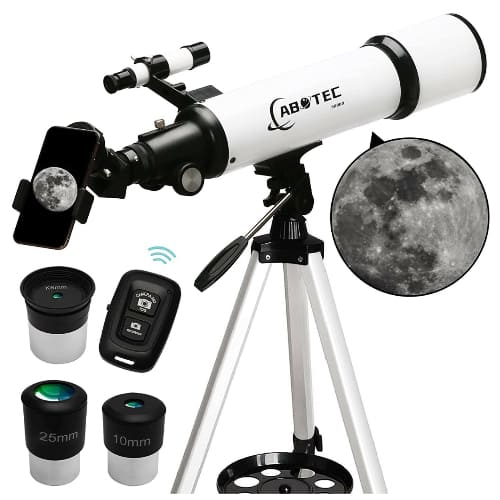
Abotec F50080M (80mm Aperture)
This highly portable refractor features a 500mm focal length and fully coated optics, making it the most popular choice for families and beginners seeking clear lunar views and easy travel.
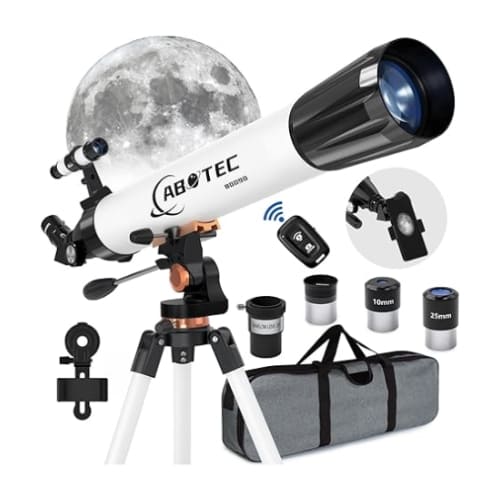
Abotec 80090 (90mm Aperture)
As the brand’s high-power specialist, this model boasts an 800mm focal length and multi-coated high-transmission lenses designed to provide detailed observations of Saturn’s rings and Jupiter’s moons.
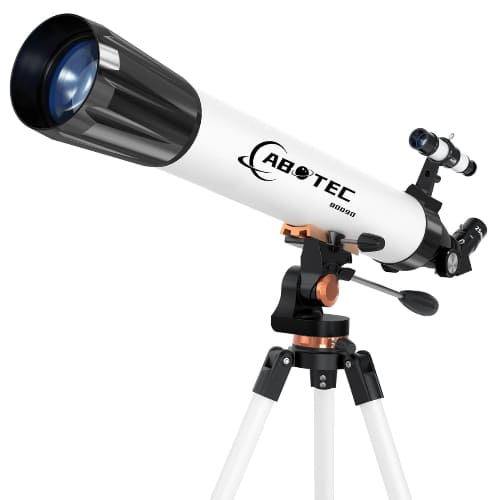
Abotec 70400 (70mm Aperture)
This ultra-compact entry-level model is optimized for young explorers, offering a 400mm focal length and a lightweight frame that serves as an ideal introductory tool for basic stargazing and terrestrial viewing.
Abotec Telescopes Store brings the wonders of the universe right to your doorstep with user-friendly designs that make astronomy accessible for everyone.
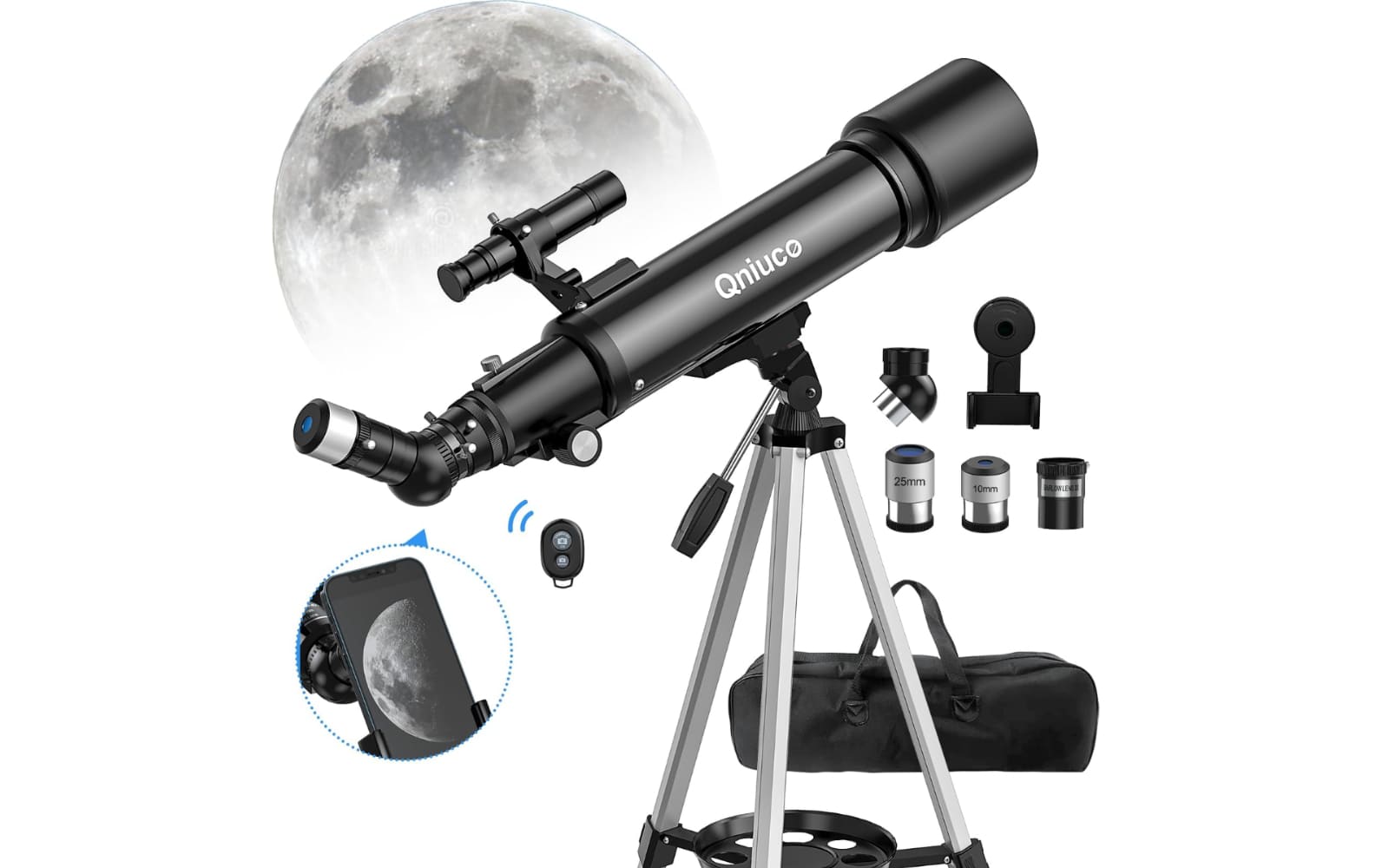
Exploring the Abotec Collection
Professional-Grade Refractors for Beginners
Discover the perfect balance of power and portability with our specialized refracting telescopes built for crisp planetary views. These telescopes utilize high-quality glass lenses to gather light and provide clear, high-contrast images of the moon and stars.
The Compact 80mm Explorer Series
Take your hobby on the road with an 80mm aperture model that packs 500mm of focal length into a travel-friendly frame. This category features fully coated optics and adjustable tripods, making it the ideal choice for families who want to transition from terrestrial viewing to deep-sky observation.
The High-Power 90mm Specialist Series
Reach further into the cosmos with our 90mm aperture telescopes boasting an impressive 800mm focal length for magnifications up to 400X. These models are equipped with multi-coated high-transmission lenses and wireless remotes to ensure your stargazing sessions are as steady and detailed as possible.
Experiences from Our Community
Marcus Thorne “I bought the 80mm model for a weekend camping trip to the desert, and I was honestly blown away by how easy it was to set up without any tools. The included carrying bag fit everything perfectly in my trunk, and by the first night, my kids were staring at the rings of Saturn with total clarity. The phone adapter was a game-changer for us; we managed to snap some really decent photos of the lunar surface that look like they came out of a textbook. While the tripod takes a second to steady after you touch it, for the price point, the optical quality is much higher than I expected for a starter kit.”
Elena Rodriguez “As someone brand new to astronomy, I was intimidated by the technical side of things, but the 90mm Specialist Series made the learning curve feel non-existent. The 800mm focal length provides a really narrow, deep field of view that made finding Jupiter’s moons a breeze once I got the finder scope aligned. I particularly love the wireless remote feature because it allows me to trigger my phone camera without vibrating the telescope, which usually blurs the image. It has become my favorite backyard ritual to set this up after dinner and just explore the craters on the moon.”
Julian Beck “I’ve used a few budget scopes over the years, and the Abotec 80090 model stands out because of the multi-coated glass—the light transmission is noticeably brighter than the plastic lenses you usually find in this price bracket. I spent about three hours last night tracking the Orion Nebula, and the 32X eyepiece provided a beautiful, wide view of the gas clouds. The assembly instructions were straightforward, and although I might eventually upgrade to a heavier mount, the portability of this entire rig is hard to beat for quick sessions. It’s a solid, honest piece of equipment for any hobbyist looking to get their feet wet.”
Abotec FAQ
What celestial objects can I see with my Abotec telescope?
With the 80mm or 90mm aperture models, you can clearly see the Moon’s craters, the rings of Saturn, and the four largest moons of Jupiter. While these telescopes are primarily designed for our solar system, you can also observe brighter deep-sky objects like the Orion Nebula or the Andromeda Galaxy in dark-sky conditions.
Why is the image I see through the telescope upside down?
It is perfectly normal for astronomical telescopes to produce an inverted or mirror-reversed image because there is no “up” or “down” in space. For terrestrial viewing (bird watching or landscapes), you should use the included diagonal prism, which corrects the orientation so the image appears right-side up.
How do I use the phone adapter and wireless remote together?
First, align the phone adapter with your telescope’s eyepiece and secure your smartphone so the camera lens is centered over the viewing hole. Once your object is in focus, use the Bluetooth wireless remote to trigger your camera shutter; this prevents the telescope from shaking, ensuring your photos of the moon and planets remain sharp and blur-free.
Is it difficult to assemble the telescope for a child or a total beginner?
Abotec telescopes are designed for “tool-free” assembly, meaning you can typically have the tripod and optical tube set up in less than 10 minutes. Every kit includes a detailed manual and access to video instructions, making it simple enough for children aged 8–12 to assist with or even lead the setup process.
How do I calculate the magnification of my different eyepieces?
Magnification is determined by dividing the telescope’s focal length by the focal length of the eyepiece being used. For example, using the 80090 model (800mm focal length) with a 20mm eyepiece provides 40X magnification; adding a 3X Barlow lens would then triple that power to 120X.
What should I do if the image looks blurry or won’t come into focus?
Begin by using your lowest power eyepiece (the one with the largest number, like 25mm) to find your target, as it provides a wider field of view and is easier to focus. Slowly turn the focus knobs back and forth; if you are viewing through a window, ensure it is open, as glass panes can distort the light and prevent a crisp image.
